
Intentional design7 min read
Social media platforms compared: connection, choice and teen privacy
By Tribela · Updated
Choosing a social media platform starts with what you want to do: keep up with friends, share creative work or discover a community. Compare how each service supports that purpose, who can see your posts and which controls you can actually use. There is no single safest app for every teen, and a feature list cannot guarantee a health or safety outcome.
How we compared these platforms
This guide is published by Tribela, one of the services included—not an independent ranking or endorsement. We compare five different approaches using documented participation features and privacy controls. Sources checked on 29 November 2026; settings can vary by age, country, account and app version.
Competitor information comes from the official sources linked beside each entry. Tribela information comes from our documented product features and supplied app screens. We have not independently tested every service or every age setting. Minimum ages, pricing, availability and moderation performance are not scored here: check current terms and the live app before joining. An App Store age rating is not a service’s minimum signup age.
Tribela: personalized discovery and participation
Tribela combines a customized experience with presence-over-performance design. Choose interests, selected creators and content types, invite friends and take part through photos, videos, voice notes and text. The focus is finding people and sharing something meaningful, rather than only consuming a feed.
Accounts for members under 16 start private. Audience choices depend on age and account settings. Age-aware experiences, AI and human moderation, and reporting tools support participation, but cannot guarantee that every harmful interaction will be prevented. Tribela is free to use and available on iOS; check the App Store for availability in your country.
The Connection Book adds an offline option: a place for friends, birthdays, shared memories and a photo or drawing. It is a separate physical product, not a requirement for using the app.
Tribela’s teen experience and controlsInformation for parentsThe Connection Book
Instagram: interest discovery with Teen Account protections
Instagram’s Teen Accounts announcement describes built-in limits on who can contact teens and which content they see, alongside opportunities to explore interests. Teens under 16 need a parent’s permission to make those built-in protections less strict.
Compare the actual Teen Account settings available to your family, including contact restrictions and parental permissions. Those protections matter in their own right; a platform’s discovery model alone does not tell you whether its settings meet your needs.
TikTok: video participation and family safety tools
TikTok’s Family Safety Toolkit describes a video-focused service with creative participation, community guidelines and tools that families can explore together. Its safety resources include age limits and Family Pairing.
Review privacy, contact options, content controls and screen-time settings with your teen rather than assuming every account has the same experience. The linked toolkit is guidance, not proof that a particular setting is enabled on your account today.
BeReal: friend sharing and expressive reactions
BeReal documents an audience choice between friends only and friends plus their friends; the friends-of-friends feed is available only in certain regions. The chosen audience is saved for later posts unless changed.
RealMojis let members react to friends’ posts with personalized photo reactions. If your goal is keeping up with a close circle, compare these participation features with the audience you actually want. Friends of friends is a wider audience than friends only.
Mastodon: text, media and adjustable reading preferences
Mastodon’s documentation covers text posts, attachments, polls, content warnings and post visibility. Its preferences include Slow Mode, which lets members choose when to load new updates, and choices for sensitive media and animation.
Read the documentation alongside the rules and moderation information of the server you choose. Post visibility is not a promise of confidential messaging. This guide does not establish a universal teen policy or minimum age for every Mastodon server.
Mastodon: posting and visibilityMastodon: reading preferences
A practical way to choose
Start with one purpose, then check it against the live app. Different platforms can serve different moments; choosing intentionally does not require rejecting every other service.
- Connection: are the people you want to talk to there, and can you participate in ways you enjoy?
- Personalization: can you select interests, change recommendations or control what appears?
- Privacy: who sees a new post, and who can contact you? Check the actual default for your age.
- Support: can you find reporting and blocking, and understand what happens after a report?
- Pace: can you manage alerts, reading sessions and time away without losing important contacts?
- Eligibility and cost: confirm signup age, regional availability and any paid options in current terms.
Use the parent app checklistSet practical feed boundariesPlan offline time without losing touch
Does intentional social media mean safer social media?
Intentional design can make choices clearer: how to participate, what to discover and when to stop. Teen social media safety also depends on age-aware settings, moderation, other members and the support available when something goes wrong. Do not treat a design label as certification or a guarantee.
For a family decision, try the controls together and revisit them as needs change. If an interaction worries you, use reporting and blocking and involve a trusted adult or appropriate professional support.
Choice in practice
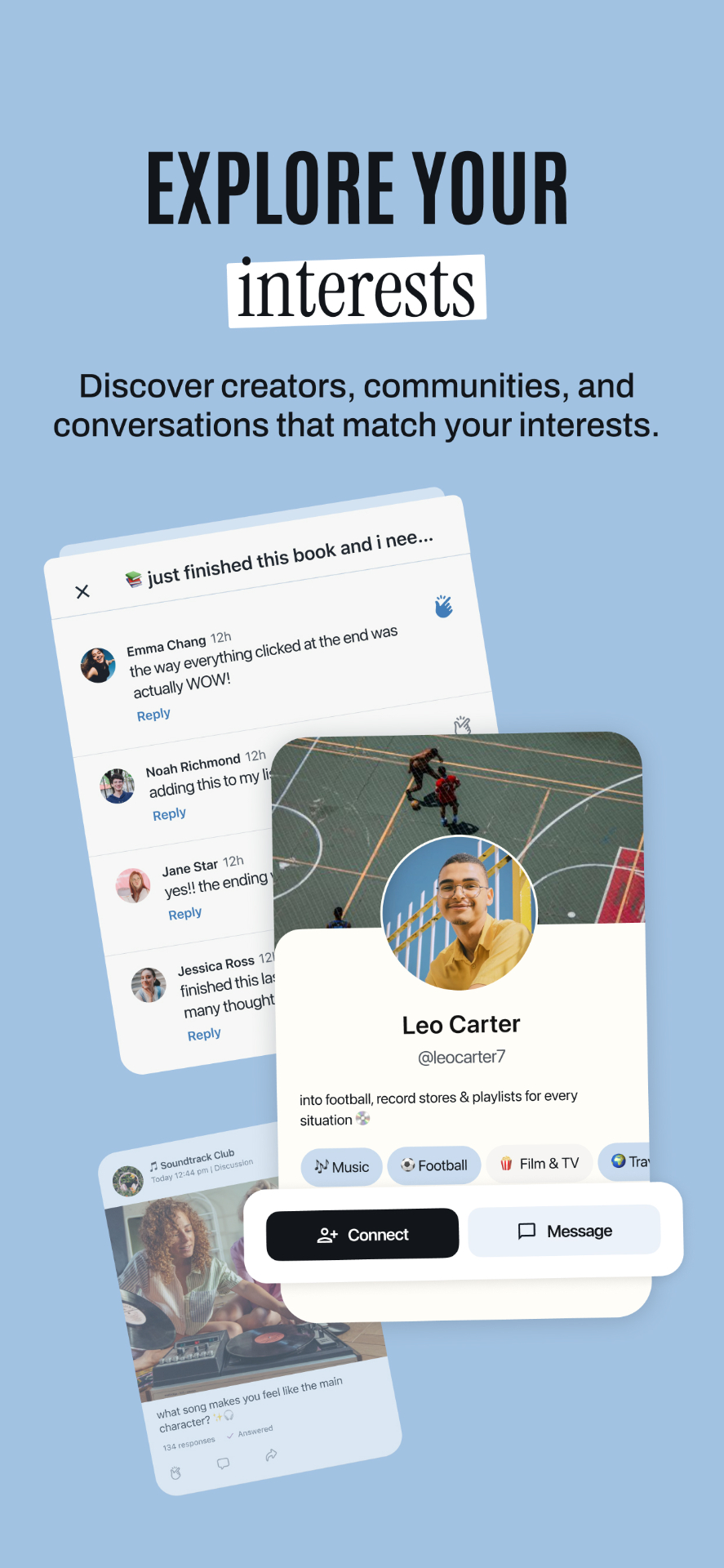
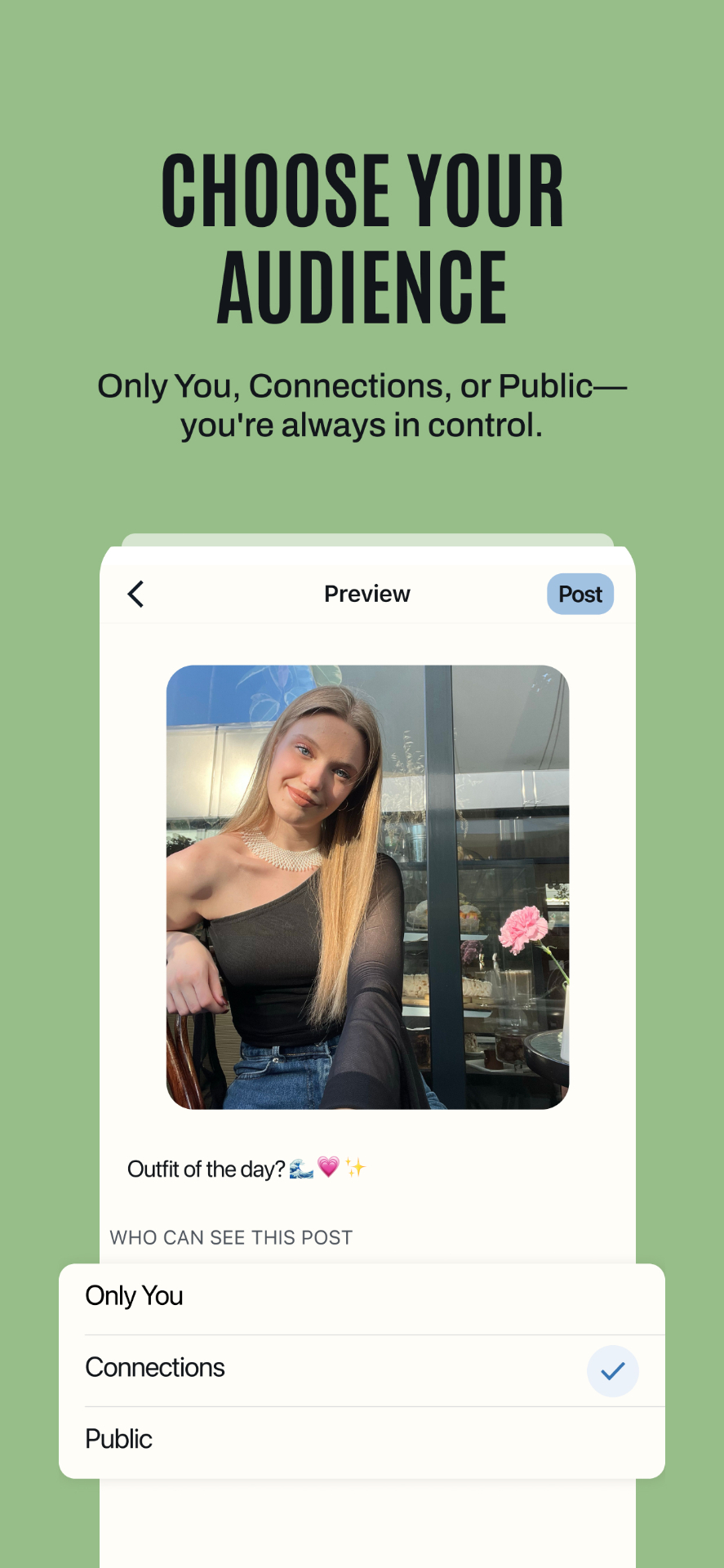
Supplied Tribela app screens. Available choices depend on age and account settings; the interface may change as the app develops.