Design & teen safety9 min read
Recent Meta lawsuits and why intentional design is the future of social media
By Tribela · Updated
The Meta lawsuits raise questions about engagement-maximizing design. Here is the legal breakdown — and how Tribela's personalized experience, age-aware protection and connection-first features offer a different direction for teen social media.
The short version: design is part of the safety conversation
Recent Meta lawsuits put a practical question in front of parents, teens and the people building social apps: what happens when a product makes continuing easier than stopping? The cases concern alleged harms linked to platform design, not simply whether an individual post should have been removed.
In August 2026, Meta reached major state settlements reported at up to roughly $18 billion. Separate personal-injury cases and school-district litigation continued afterwards. In November, plaintiffs also sought sanctions over allegedly withheld evidence. These are different legal developments: an agreement, an allegation and a request for a court order are not interchangeable.
This article reflects reporting available on 28 November 2026. It is an explanation for families, not legal advice or a finding that any particular app caused a particular person's injury. Tribela's perspective is straightforward: a personalized experience, meaningful connection and age-aware protections should be central to social media, not secondary to engagement.
August 2026: what the multistate settlement means
State attorneys general alleged that Meta designed Facebook and Instagram features to encourage compulsive use among children and teens and misled families about associated risks. The August agreements resolved major state claims and included commitments relating to teen time limits, nighttime access, parental tools and age assurance.
The headline figure needs care. News reports described combined agreements of up to roughly $18 billion; California's attorney general described the multistate component as up to $17 billion over ten years, while other reporting separated a Texas agreement. Maximum totals, conditional payments and individual state allocations are not the same as money already paid. Avoid reading the headline as a single unconditional $18 billion payment.
A settlement resolves the claims it covers. It does not mean every allegation was proved at trial, and it does not resolve every separate individual or school-district case. Meta has disputed claims that its products were deliberately designed to addict young users and has pointed to its teen protections.
AP: Meta settlement reportingReuters: August 26 settlementsCalifornia attorney general: settlement announcementCNBC: settlement figures and terms
October: separate teen personal-injury settlements
Reporting on 30 October described Meta reaching a confidential agreement with a teen plaintiff as a Los Angeles trial was taking shape, following an agreement with another teen plaintiff. California Courts Newsroom and Bloomberg Law also reported these developments. The plaintiffs alleged physical and mental-health injuries associated with social-media use and product design.
The terms were confidential. There is no basis here to invent a payout, describe the agreements as admissions of liability or assume they apply to all teenagers. Their relevance is narrower: individual claims continued independently of the state settlement, and some were resolved without a verdict against Meta in those cases.
Reuters: October 30 teen settlementCalifornia Courts Newsroom: second settlementBloomberg Law: confidential agreements
November: a sanctions request over evidence
Reuters reporting dated 16 November, also reproduced by other news outlets, described lawyers for individuals and school districts asking a federal judge to sanction Meta over documents they alleged were improperly withheld or redacted under attorney-client privilege. They sought consequences for how that evidence could be presented and challenged at a forthcoming trial.
Meta said it acted in good faith and characterised the request as a litigation tactic. A sanctions motion is a request, not a ruling that sanctions have been imposed. The reporting reviewed for this article does not establish a final decision on that motion. The dispute concerns evidence handling; it should not be described as a new settlement or proof of every underlying mental-health allegation.
Reuters: November 16 sanctions requestReproduced reporting: evidence dispute and Meta's response
Why school districts, including New Haven, are filing claims
New Haven announced in November that it had joined litigation against the companies behind several major social platforms on behalf of its public schools. Local reporting describes allegations that platform design contributed to student difficulties and required schools to divert staff and resources. The city sought compensation for those costs and changes to platform practices.
Those are claims made by the plaintiffs, not established findings in New Haven's case. A school-district filing is also not an individual compensation scheme for every parent or student. It shows why the debate extends beyond a family's screen-time rules to the way products interact with schools and public services.
New Haven Register: school-district filingNew Haven Independent: local reportingTribela's information for schools
Infinite scroll, autoplay and engagement loops: what to check
Infinite scroll automatically loads more content as you move through a feed. Autoplay starts a video without a fresh decision to watch. Engagement loops are repeated prompts to return or continue, such as notifications and visible rewards. These features are not identical, and their presence alone does not prove a mental-health injury or legal liability.
For families, the useful question is what each feature makes easy. Can you finish what you came to see? Does the next video wait for your choice? Can you share without a public popularity score? Can you control who sees a post before it goes live? Assess the actual settings rather than relying on a broad safety label.
What is infinite scroll?How to stop doomscrolling: practical steps
A personalized experience built around the individual
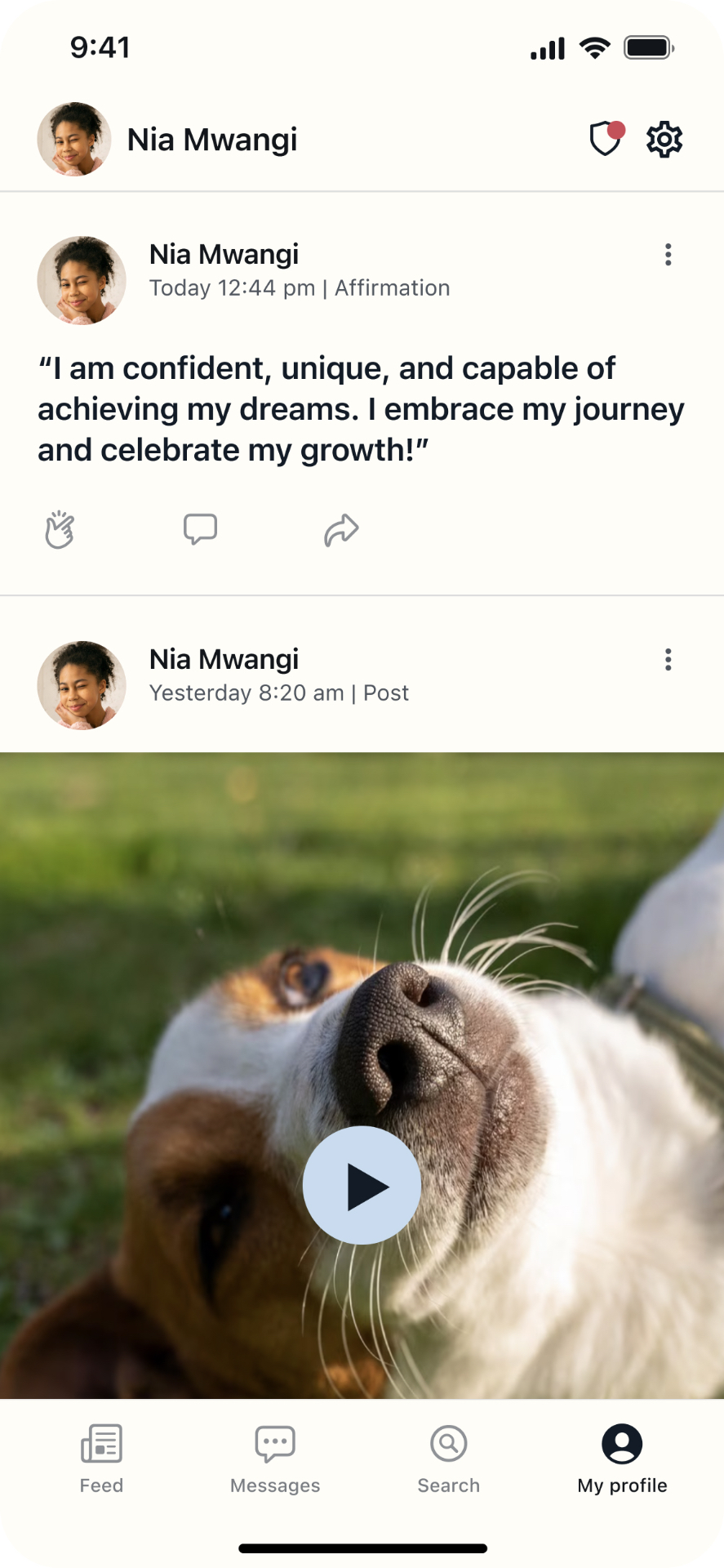
The lawsuits highlight alleged risks of design that maximizes engagement. Tribela starts with a different product question: how can the experience serve the person using it? Members can personalize their feed around their interests, chosen creators and content types, giving them an active role in what they discover.
That makes personalization a tool for participation, not just a way to keep watching. Someone interested in music, sport or art has a starting point for discovering people and ideas they care about. The purpose is to bring you closer to your interests and the people who share them.
Aligned, Not Algorithmic is our name for that priority: your feed, your pace, your boundaries. A finite feed and tap-to-play video support those choices by giving you clear moments to decide what comes next. They are part of the experience, not the whole product story.
Presence over performance: room to create and participate
Present, Not Performative means giving people room to share what matters to them. Tribela supports photos, video, voice notes and writing, so members can contribute in the format that fits the moment: a creative project, an idea, a conversation or an update for friends.
The positive goal is participation and self-expression. Posts are not presented with public popularity scores, and sharing happens without filters. Those choices support a space where the contribution matters more than its visible ranking; they are not a promise about how every person will feel.
Where the litigation raises questions about comparison and engagement rewards, Tribela emphasizes being present with your people and interests. A useful moment might be sharing something you made or starting a conversation, rather than simply consuming another sequence of posts.
Intentional community that gives connection a starting point
Shared interests are a reason to meet people, not just a category of content to follow. Tribela brings chosen creators, original content and personal connections into the experience so discovery can lead to conversation and participation.
Members can invite friends directly from the app and choose what to share with their Connections. A photo, a voice note or an original creator's work can become a starting point for a real exchange. The emphasis is on what people do with an interest together, rather than passive consumption alone.
Supported, Not Sold means Tribela is free to download and use, with no ads right now and brand partnerships intended to be intuitive, not disruptive. That gives the product a clear invitation: explore, contribute and connect on your terms. It describes today's model, not a guarantee about every future partnership.
Explore Tribela original contentInvite friends and choose your audience
Age-aware experiences and youth-specific AI moderation
A teenager's experience needs to account for age and context. Tribela's age-aware approach includes protective defaults and moderation that considers age, context and risk when reviewing content. The aim is to make protection part of participation, rather than treat every member and situation as identical.
Real, Not Chaotic combines youth-focused AI-supported moderation with human review. These systems work alongside privacy and audience tools to support sharing and discovery with appropriate boundaries. AI is one part of the safety approach, not a replacement for human judgement or a guarantee that harmful content can never appear.
Tribela accounts are for ages 13 and over. The App Store's 9+ rating describes content suitability, not the registration minimum. Age assurance supports the age-aware approach without implying a named certification or perfect verification.
Privacy and user controls that make choice practical
Members choose Only You, Connections or Public before sharing each post and can change the audience later. That makes privacy a decision at the moment it matters: you can keep a thought to yourself, share an update with approved people or choose a public contribution.
Accounts for members under 16 start private, so only people they approve can see their posts. This protective starting point works alongside individual audience choices, giving teens concrete controls over their participation rather than asking them to work out an audience after posting.
For parents searching for safe alternatives to Instagram or TikTok, personalized discovery, age-aware moderation and practical privacy tools are useful features to compare. They support Tribela's aim of a healthier relationship with social media; they are not evidence that the app prevents mental-health injuries or is safer in every situation. No app can guarantee perfect safety. Review controls together and agree on someone to contact if something feels wrong.
Tribela for teens: privacy and audience choicesThe guide for parentsHow to choose a social app for teensParent guide in German (English version above)
The Connection Book: connection beyond the feed
The Connection Book turns the same connection-first idea into something you can hold. Tribela's offline friendship book has room for birthdays, contact details, shared memories and a photo or drawing. Filling it in together makes friendship an activity: ask a question, remember a moment and make a plan to meet again.
Alongside the app's voice notes, creative sharing and friend invitations, the book encourages people to contribute to their relationships rather than only consume content. It is a practical way to keep people close across online and offline moments, not a treatment for compulsive use or a substitute for professional support. The Connection Book is ready. Order now in time for Christmas.
Explore The Connection BookOrder nowPlan a digital break without losing touch
Why we believe intentional design is the future
The lawsuits do not settle every question about social media and teen mental health. They do make product choices harder to separate from the safety conversation. The opportunity is to build around the individual: relevant discovery, creative participation, age-aware protection and clear control over what is shared.
Our view is that a healthier alternative should give people more agency and more reasons to connect. Tribela combines a customized experience, presence-over-performance design, intentional community, youth-focused moderation and the Connection Book into that invitation. Different platforms can serve different moments; this is a positive choice, not a demand to abandon everything else.
Tribela is the space between doomscrolling and digital detox — somewhere to explore what matters, contribute something of your own and stay connected on your terms.
If social-media use or distress is disrupting sleep, school or daily life, talk to a trusted adult or qualified professional. A different app can change the setup; it cannot replace support that a person needs.
Source note: AP, Reuters and New Haven Register links are provided alongside accessible corroborating reporting and the state announcement. Their full articles were not accessible during this review. Legal developments are described only to the extent supported by the corroborating sources, and later rulings may change the position.